
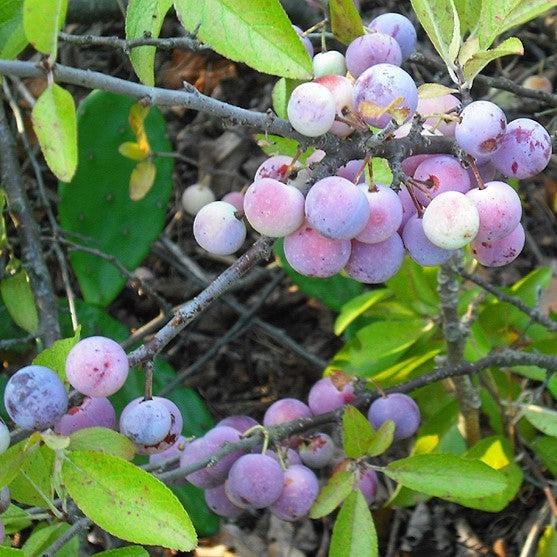
Plum, Beach Plum
Beach Plum is a native suckering deciduous shrub that forms dense thickets with dull green foliage. The white flower clusters bloom heavily every spring, but only sets fruit every 3-4 years. These small edible plums can have colors from red to near black, and are a favorite among wildlife. Needs cross-pollination to set fruit.
|
Type: |
Shrub |
|
Origins: |
NE N. American Coasts |
|
Height: |
6' - 8' |
|
Spread: |
6’ - 8' |
|
Spacing: |
7’ |
|
USDA Hardiness Zone: |
3 - 8 |
|
Culture: |
Full Sun, Part Sun |
|
Bloom Color: |
White |
|
Season of Interest: |
Spring, Fall |
MAINTENANCE NEEDS: Low Maintenance. Common diseases are Plum pockets, plum bladder, and leaf spot. Brown rot can be a serious issue. Potential pests that can seriously reduce crop include plum gouge, plum curculio, and red mites.
LANDSCAPE USES: Accents or Group Plantings, Borders, Woodland Gardens, Wildlife Gardens, Foundation Plantings.
COMPANION PLANTS: Bayberry, Goldenrod, Evening Primrose
IMAGES: Photo by David J. Stang, Prunus maritima 4zz, CC BY-SA 4.0, (2) Plant Image Library, Prunus maritima (Beach Plum) (34071357920), CC BY-SA 2.0, (3) Plant Image Library, Prunus maritima (Beach Plum) (34071357950), CC BY-SA 2.0, (4) Aznaturalist, BeachPlums, CC BY-SA 3.0
*As plants have ranges in appearance they may not appear as the images shown.
Beach Plum is a native suckering deciduous shrub that forms dense thickets with dull green foliage. The white flower clusters bloom heavily every spring, but only sets fruit every 3-4 years. These small edible plums can have colors from red to near black, and are a favorite among wildlife. Needs cross-pollination to set fruit.
|
Type: |
Shrub |
|
Origins: |
NE N. American Coasts |
|
Height: |
6' - 8' |
|
Spread: |
6’ - 8' |
|
Spacing: |
7’ |
|
USDA Hardiness Zone: |
3 - 8 |
|
Culture: |
Full Sun, Part Sun |
|
Bloom Color: |
White |
|
Season of Interest: |
Spring, Fall |
MAINTENANCE NEEDS: Low Maintenance. Common diseases are Plum pockets, plum bladder, and leaf spot. Brown rot can be a serious issue. Potential pests that can seriously reduce crop include plum gouge, plum curculio, and red mites.
LANDSCAPE USES: Accents or Group Plantings, Borders, Woodland Gardens, Wildlife Gardens, Foundation Plantings.
COMPANION PLANTS: Bayberry, Goldenrod, Evening Primrose
IMAGES: Photo by David J. Stang, Prunus maritima 4zz, CC BY-SA 4.0, (2) Plant Image Library, Prunus maritima (Beach Plum) (34071357920), CC BY-SA 2.0, (3) Plant Image Library, Prunus maritima (Beach Plum) (34071357950), CC BY-SA 2.0, (4) Aznaturalist, BeachPlums, CC BY-SA 3.0
*As plants have ranges in appearance they may not appear as the images shown.
Original: $54.99
-65%$54.99
$19.25Description
Beach Plum is a native suckering deciduous shrub that forms dense thickets with dull green foliage. The white flower clusters bloom heavily every spring, but only sets fruit every 3-4 years. These small edible plums can have colors from red to near black, and are a favorite among wildlife. Needs cross-pollination to set fruit.
|
Type: |
Shrub |
|
Origins: |
NE N. American Coasts |
|
Height: |
6' - 8' |
|
Spread: |
6’ - 8' |
|
Spacing: |
7’ |
|
USDA Hardiness Zone: |
3 - 8 |
|
Culture: |
Full Sun, Part Sun |
|
Bloom Color: |
White |
|
Season of Interest: |
Spring, Fall |
MAINTENANCE NEEDS: Low Maintenance. Common diseases are Plum pockets, plum bladder, and leaf spot. Brown rot can be a serious issue. Potential pests that can seriously reduce crop include plum gouge, plum curculio, and red mites.
LANDSCAPE USES: Accents or Group Plantings, Borders, Woodland Gardens, Wildlife Gardens, Foundation Plantings.
COMPANION PLANTS: Bayberry, Goldenrod, Evening Primrose
IMAGES: Photo by David J. Stang, Prunus maritima 4zz, CC BY-SA 4.0, (2) Plant Image Library, Prunus maritima (Beach Plum) (34071357920), CC BY-SA 2.0, (3) Plant Image Library, Prunus maritima (Beach Plum) (34071357950), CC BY-SA 2.0, (4) Aznaturalist, BeachPlums, CC BY-SA 3.0
*As plants have ranges in appearance they may not appear as the images shown.

